Omnichannel & Sentiment Analysis

In general, it’s usually quite useful to be able to see how customers are engaging with your company, and how they’re feeling about things. If customers are disgruntled, annoyed, or complaining, it’s important to be able to understand the root cause/s of their issue/s, and resolve them as soon as possible.

One of the tools available in Omnichannel is Sentiment Analysis. What is this?

Being able to identify how customers see/interact with your brand, accurately, is vitally important. Using people to manually trawl through your data to attempt to identify this has many drawbacks:

  • Lack of consistent approach
  • Large amounts of time needed
  • Many manual touchpoints

As a natural follow-on from this, being able to identify & categorise the sentiment in customer communications through using machine learning can unlock many business use cases that can then result in immense value for your company.

Microsoft provide the ability for this through Azure Cognitive Services. It’s really quite interesting in how this actually works. You can go to https://azure.microsoft.com/en-gb/services/cognitive-services/text-analytics/, put in a sentence, and see what results come back. It can be quite amusing to see what different colours come out as!

As part of the analytics around chat (and by chat, I’m not referring to just a chat bot – anything within Omnichannel can be referred to as ‘chat’, from an agent perspective), sentiment analysis can be used.

This is quite easy to set up. To do so, open the Omnichannel Administration Hub, go to the Settings area in the left-hand menu, open ‘Sentiment Analysis’, and click to enable it. Remember to save it to apply it!

This will then result in the agent interface showing the following:

Now, this isn’t static. The sentiment will update in real time as the conversation continues, and will change based on what the customer is saying.

Now, obviously we’d expect agents to be able to judge the tone of the conversation based on what’s being said (at least I’d personally expect it). So for this, the sentiment that shows within the chat isn’t that helpful.

However, it does come into its own in a slightly different place. This is the Omnichannel Sentiments Analysis Dashboard, which is served through PowerBI.

Through this, supervisors can understand how their company is measuring up to their KPIs & necessary trends. They can also understand the overall support experience that omnichannel is having, along with tracking the sentiment of customer interactions. As a result of having this to hand, better understanding of customers can take place, resulting in improvement of the overall customer experience.

Once the dashboards have been configured within PowerBI (I’m going to do a separate post on this), it’s then possible to surface these within the Omnichannel Customer Service Hub (which users with the Supervisor role will be able to see). This means that supervisors won’t need to open a separate place to see these; it’s all available through the same interface.

There’s also a more detailed view into what’s actually happening, through the ‘Omnichannel Insights – Sentiment Analysis Report’. This displays a lot more information, drilling down & splitting the data up into agents, queues, channels & trends. Here’s an example of this:

With all of this information as the fingertips, it’s now really possible to drill down into the details. Through this, we’re able to carry out full & proper analysis on what’s actually causing customer interactions. From looking into what’s occurring, it’s then possible to review the current state of things, and see what can be improved. This will then result in more positive sentiments shown by customers, and drive their loyalty to the company!

MB-600 Solution Architect Exam

I haven’t really touched very much on any exams that I’ve taken so far during the lifetime of this blog. I’ve mentioned them a few times (ie how important they can be), but haven’t really gone into detail.

However, having seen various comments online recently around the MB-600 exam, I thought I’d do a post on it with my thoughts and comments!

So, what is the MB-600 exam? Well, it’s sort of the ‘Holy Grail’ for Dynamics 365/Power Platform. This is due to the actual full name for it – ‘Exam MB-600: Microsoft Power Apps + Dynamics 365 Solution Architect’. Indeed – assuming you pass it (and you’ve already passed the MB200, and either the MB210. MB220, MB230, MB240), you can officially refer to yourself as being a Microsoft certified ‘Solution Architect Expert’.

Impressive!

The exam was being talked about at the beginning of 2020, and went live (in beta) on Jan 27th 2020. If you’re wanting to book it, do so at https://docs.microsoft.com/en-us/learn/certifications/exams/mb-600.

I sat it several days after it went live, and to be honest found it quite challenging. Why was that? Well, when I sat it, there were no learning paths on Microsoft Learn for it at all. Thankfully that’s now changed – there’s a massive amount of great material at https://docs.microsoft.com/en-us/learn/certifications/power-apps-and-d365-solution-architect-expert. If you’re looking to go ahead and do the exam, I’d highly recommend you go through everything that’s there.

I’ve taken quite a few exams since early 2019, and have now taken the general approach to take exams in Beta. Although there can be some waiting until the results are announced, they’re cheaper, and give you an understanding of what’s going on.

I sat the exam through the Proctored option. I’m not going to say too much about that (you can look up online what this is about), other than to say that I feel that Microsoft really should be doing something about the proctored experience. Pearson Vue is in charge of this, but it can be really bad at times (having taken a dozen or so exams this way in the last year, I feel I’m quite qualified to be able to judge this!). I hope that things do get better for this.

So, to the exam itself. Well, I was lucky – there were no Labs in it (yet!). Several case studies, and lots of questions. Quite hard questions as well – make no mistake, they’re out to seriously test your knowledge.

The first thing that I ‘loved’ when starting the exam was the general briefing, which included something along the lines of this absolute gem (this isn’t word for word, as I’m not allowed to write it down during the exam, but it gives the gist of it):

Some question sets may have more than one solution, while others might not have a correct solution at all

Right. So tell me – if there’s no correct solution, what am I supposed to do? I’m still waiting for someone to enlighten me on this matter, as I haven’t found anyone who’s able to explain it….

Now, part of the exam rules state that it’s not allowed to share any of the exam questions. What I’ve therefore included below is an overview of the sorts of things that were covered for my exam (Note: exams are composed from question banks, so there could be many things that weren’t included in my exam, but could be included for someone else!).

  • Data imports – what they are, how to go about them, troubleshooting them, etc. Also covering different types of sources
  • Security models, permissions, security types (field level, role, user, team etc)
  • Teams integration. How it’s set up, configured & used
  • Solution patch types. What they are, how they’re applied, how they’re used, benefits & drawbacks
  • BCP (Business Continuity Planning and Disaster Recovery) processes. What option/s should you be considering to ensure your business is fully covered in a disaster situation, how are they configured
  • Portals. What they are, how they’re set up, security permissions
  • Business rules, Business Process Flows, Workflows. What each one does/doesn’t do, benefits & drawbacks, how they’re set up & configured
  • Systems – On Premise vs Cloud. The advantages and/or drawbacks of each type, and the different BCP methods (see above) for each one
  • Data integration. OData vs Custom Service for continuous data
  • SLA’s and KPI’s. What they are, when each is used, how to set up & configure them
  • System upgrade paths and compatibility. How you go about upgrading legacy systems, and the necessary path/s that you have to take for a given version number
  • Customer Service through multiple channels. Which option/s would you select for a given scenario, how would you set it up/configure it
  • CDM/CDM/PowerBI/Azure Service Bus/PowerApps. What is each one, what are the benefits/drawbacks of them, how is each one used, & set up/configuration
  • Licensing Types. What license/s would you need for a given scenario
  • D365 Sales Insights. What it is, what benefit/s it brings, how is it used
  • Data security. How is security used for Dynamics 365 & PowerBI data, how is it set up/configured
  • Field properties. For a given scenario, how would you change field properties and/or parameters?
  • Data Migration. Different options available for this, benefits/drawbacks, resolving issues
  • Form security. What is it, what are the different types of security that’s able to be used, how is it set up
  • Solution management. What are the different types of solutions, how is each one used, what are the associated risks, which option would you use for a given scenario

Wow. That’s a LOT of stuff. Like…an incredible amount. Some of it touches on parts of the system that I’ve never used before (like PowerBI). Other parts are extremely familiar.

I can’t tell you if I’ve passed it or not…YET!. Results aren’t yet out, as it’s still in beta (and from what I’m hearing, it’s likely to be remaining in beta for several months still.

So, if you’re aiming to take it – I wish you the very best of luck, and let me know your experience!

Omnichannel & Agent Scripts

Earlier this week I started to share information around the Productivity Tools that Microsoft provides (as a separate solution, admittedly) for Omnichannel – https://thecrm.ninja/omnichannel-productivity-tools/. With it, I also covered Macros, and some of the benefits that using macros can bring to a company

Now, we all know that the absolute key point in ensuring a consistent & holistic approach is to have a method for getting something done. A ‘script’, in other words. With this, we can set out the steps that we want to be carried out, in the order that they should be performed, with appropriate information against each item. This results in agents (hopefully!) following this, giving the customer the same (and great) experience each and every time they need to interact.

Scripts isn’t just about instructions to be carried out though. It also allows macros to be included, that agents can run as they go through the script.

Here’s an example of something that I’ve been playing around with in my test environments (ninja’s are just SO cool, that I’ve had to rein in my imagination!):

So that’s an example of what you can do. Let’s now see how we set these up. There are several steps to it

In the Omnichannel Administration Hub, you should see the Scripts entry in the left hand bar:

Open it, and click on ‘New’ in the main menu bar. You’ll get the following form appearing:

Type in a name for the script, and a description (personally I find it annoying that I can’t see all of the text in the Description field – perhaps Microsoft may change this at some point). Save the form, and the grid to the right becomes active!

Clicking the ellipse (3 dots) in the Agent Script Steps grid gives several options:

One of the very helpful options here is to add an existing script step. What’s a script step, I hear you ask. Well, each specific item in a script is referred to as a ‘script step’. You set these up as you go through your scrip, as shown below. You don’t need to create a new script step for each script if they’re the same thing – you can just create one, & add it as needed to multiple scripts (just be careful, because if you need to change it at some point, the changed/updated version will display in all scripts that it’s associated with!.

As with any record, you’ll put in a name, and a description. What you’ll also do is give it an order number (this is manual, not auto-generated). The order number is how the system orders the different steps. There’s also the option (which is a required selection) as to whether this is text, macro, or a script:

  • Text. This will be free text that you enter into the script step, which will then be displayed on the screen for the omnichannel agent to see
  • Macro. This will give you the option to point to a macro that you’ve already set up. When the agent will click on it during the session, the macro will run
  • Script. This allows you to reference existing scripts – you can have smaller scripts that you can then use as ‘building blocks’ to create more complex scripts

Once you’ve gotten the script set up, we then need to configure the chat sessions to actually use it. This allows us to set up multiple scripts in our system, and use them as appropriate (eg by using pre-survey questions, it’s possible to direct a customer to a specific queue, and then have the agents use a specific script for this).

To do this, we go to Sessions, and open the session entry that we’re wanting to set the script up for:

Once it’s open, switch to the Agent Script tab. This has a grid that shows all of the script/s that are set up for it. To add script/s, use the drop-down menu on the top of the grid:

The last thing that needs to be done is to enable the Productivity Pane, as otherwise agents won’t be able to see all of this in the first place! Thankfully this is a single setting, and is done as follows:

  • Go to the Productivity Pane option in the left-hand menu. Click on it
  • Set the Productivity pane option to ‘Enabled’
  • Set the Mode option based on your requirements (this is how it appears in the agent interface). By default it’s set to ‘Collapsed’
Enable the productivity pane

And VOILA! It’s now all set up and ready to go:

Bus Apps At Speed Day

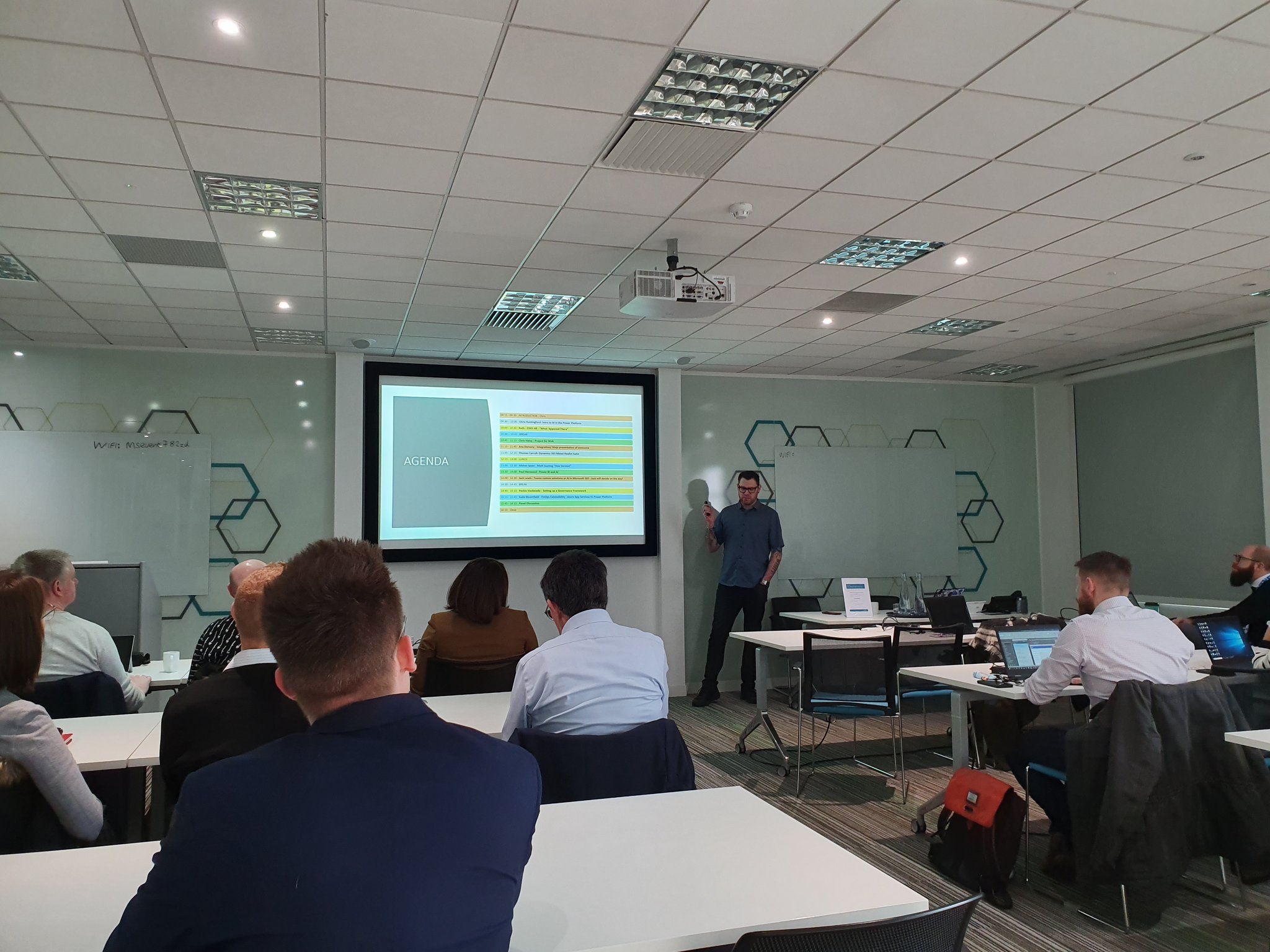
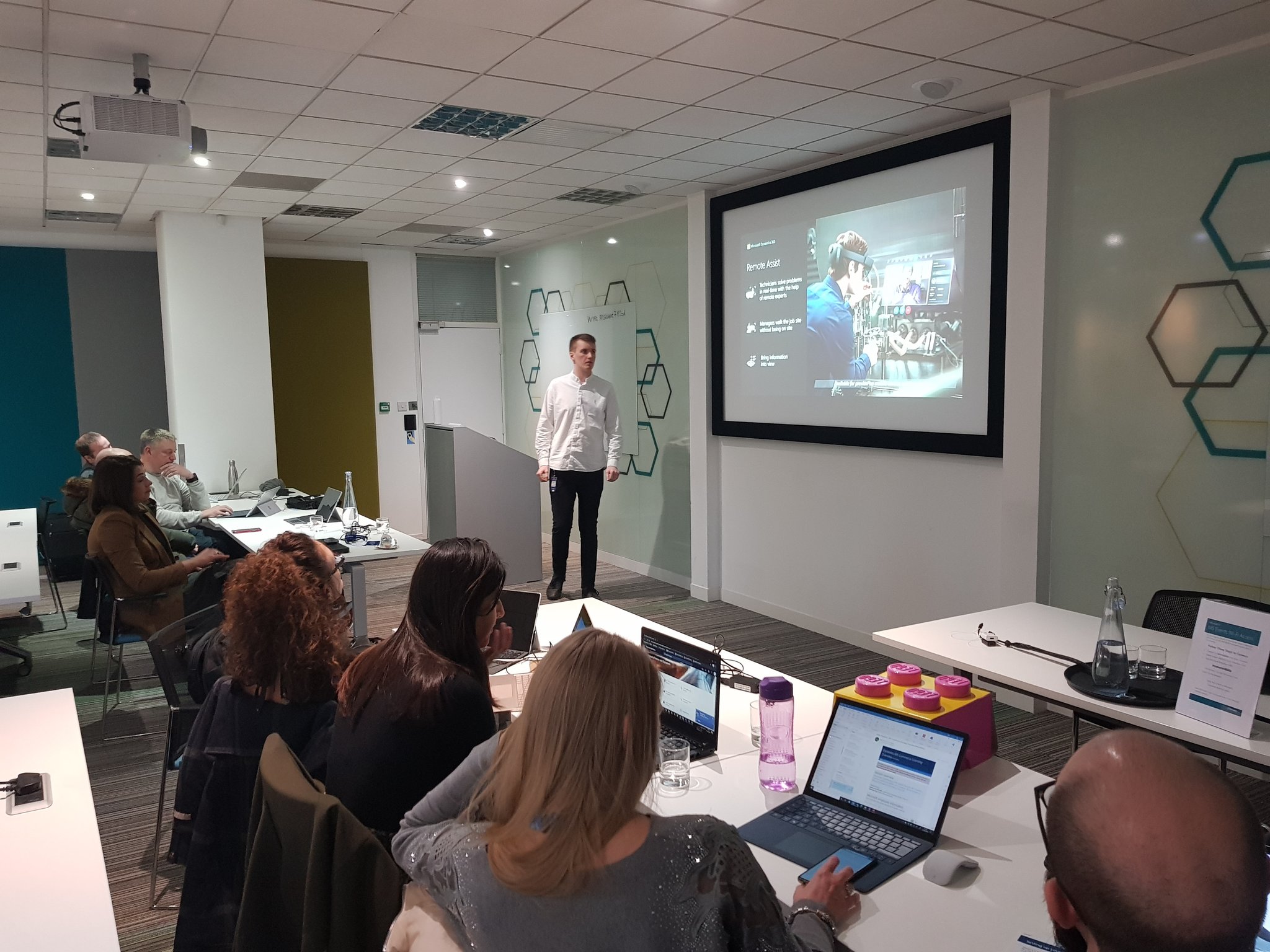
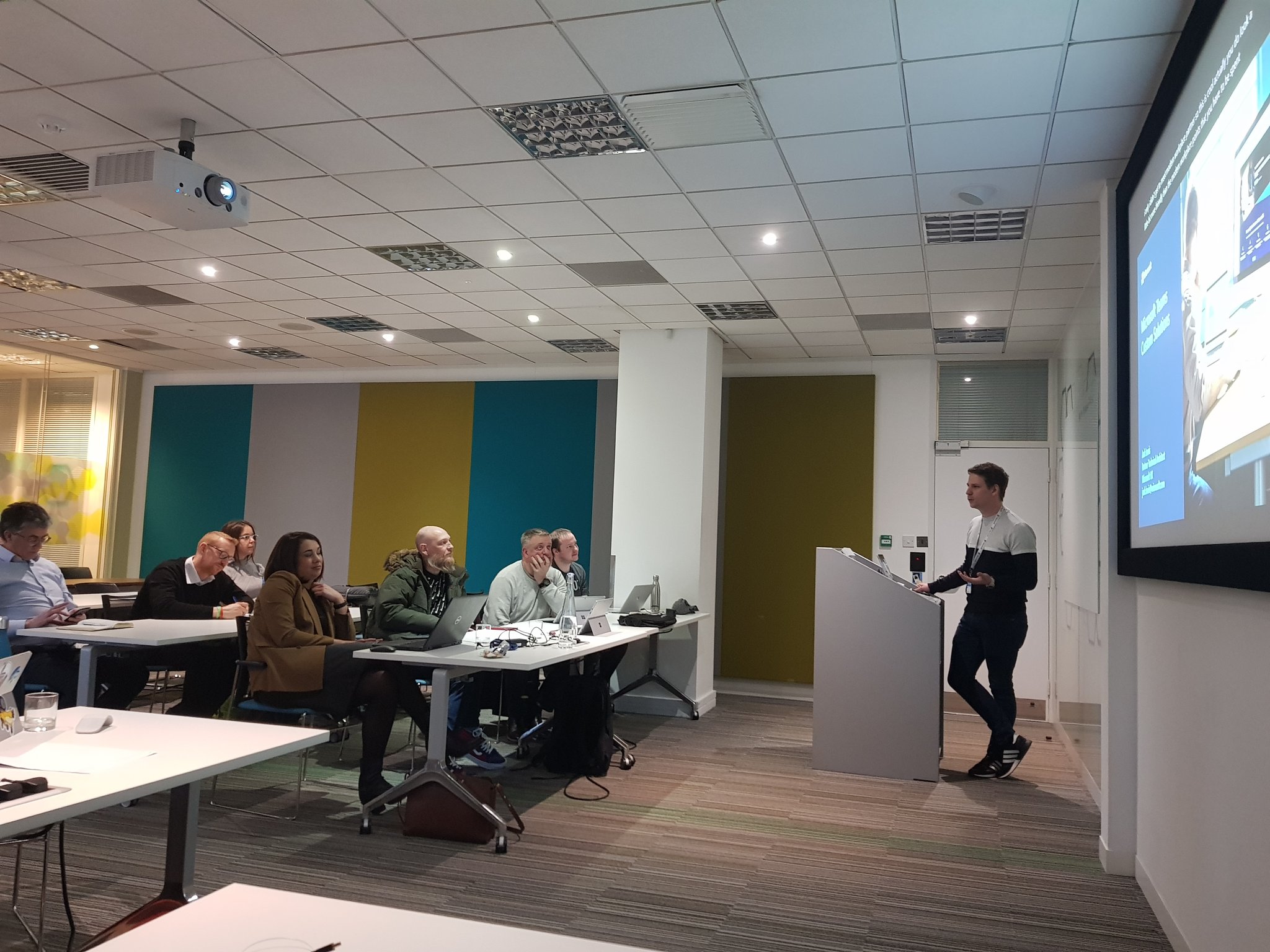
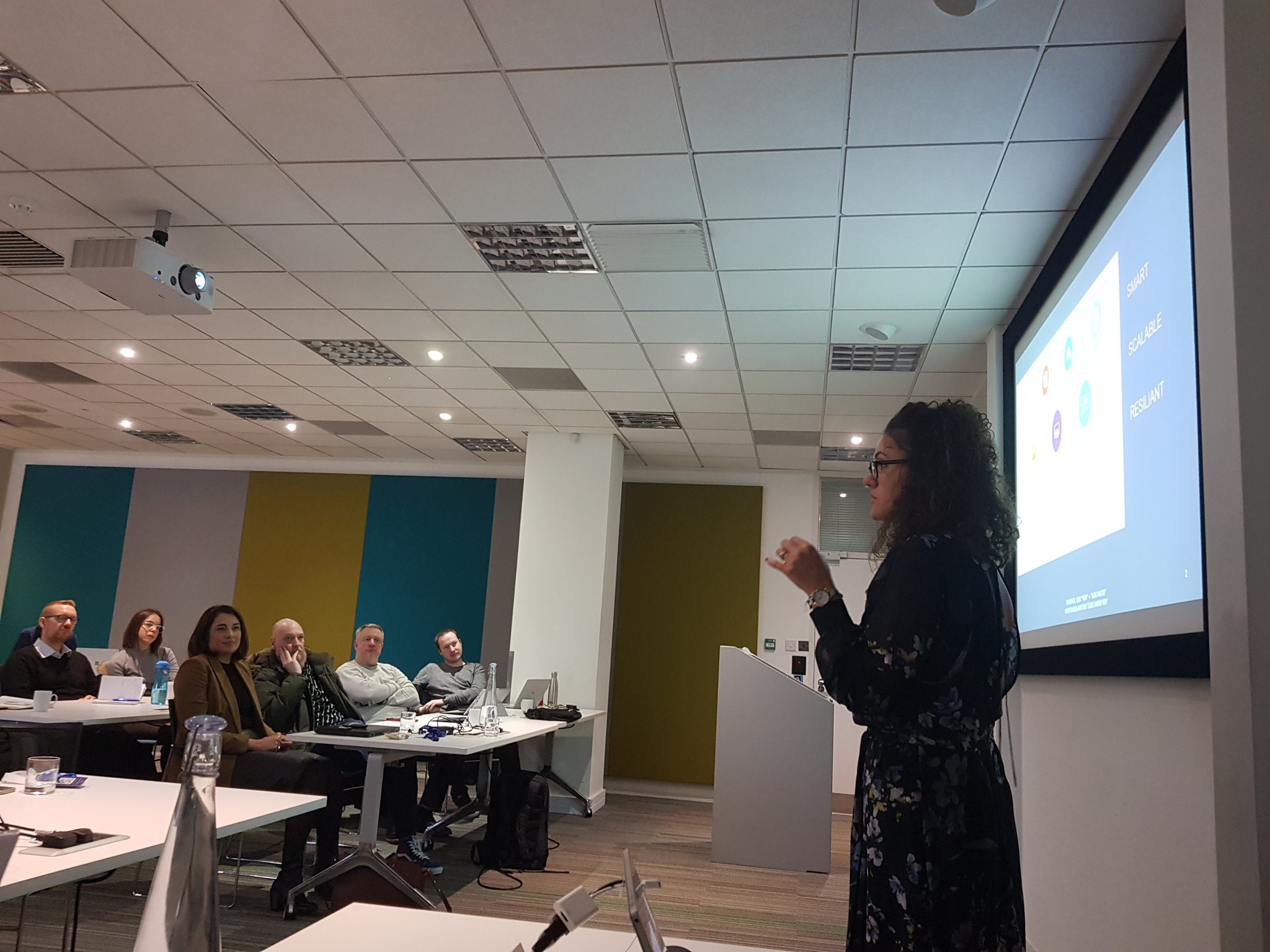
Today I attended a ‘BusApps@Speed’ day (BusApps refers to Business Applications) at the Microsoft campus in Reading. The aim of the day was to give a whistlestop tour through many different applications, including some that I’m not that familiar with (in terms of the functionality and integration). Organised by Chris Huntingford (who also took most of the pictures that I’ve used below), it was really great to learn & broaden my knowledge and understanding of the different applications/functionality that can be used

A quick summary is below:

Image

Chris kicked off the day in his usual style, talking about how the landscape has changed and evolved. Quickly covering abilities that are now present in Power Apps, Power Automate and Power BI with quite some finesse, we were immediately entranced and ready for the rest of the day.

Image

Ruth Forster-Towne from FourVision gave a presentation about Human Resource, which is what Talent has been rebranded to (along with some changes). There were some gaps in the functionality, so FourVision brought several HR ISV solutions to the table to fill these gaps, which is really great to see. The ability to have a standard integration for payroll gives the option for companies to use a local payroll provider in order to be compliant with the necessary legislation (as this can change extensively from country to country!)

Chris Haley spoke about Project for Web, Project Online and PSA. Covering some of the architecture and how best to use each one, it was quite informative as I’ve never used any of them. It was also interesting to hear that DevOps could be included alongside as a project tool, and I’m going to be doing some research into how this would work best.

Image

Afshan Ipsen blew us away with talking about ‘One Version’ for FinOps – we couldn’t believe it’s the first time she’s carried out a speaking engagement at one of these events. Talking through the continual development of the platform, and how to efficiently handle testing the new releases (minor as well as major) on a regular on-going basis. Some really amazing thoughts which can apply to all technology projects really.

Image

Thomas Carroll absolutely wowed us with his presentation on the different Reality series that Microsoft has. Augmented, Virtual and Mixed all bring amazing solutions for being able to help us get better, as well as troubleshoot situations.

Dynamics 365 Guides in particular together with HoloLens can bring the amount of time needed to skill up in a particular area down by a massive amount

Image

Jack Lewis came to talk to us about Microsoft Teams, and the amazingly cool stuff that it’s now able to do. Benefits to people using it obviously include auto-creating Sharepoint sites in the background, but what was amazing to hear was that it’s possible to surface some Power Platform capabilities within Teams itself! Imagine having a Power App right there in the Teams channel.

Paul Henwood gave an amazing session on Power BI and AI capabilities. Demonstrating some of the functionality that Power BI can bring to the table (along with some of the noticeable limits when it comes to data sizes and processing), it was great to learn how AI can really feature. I’ve only played around with Power BI a little bit, and it’s definitely on the list of things that I’d like to take a further look into!

Image

Ana Demeny talked to us about integration architecture, and pointed out very clearly that the ‘right solution’ will always depend on the exact circumstances of the project. It was very clear that it’s vitally important to clearly understand all of the different components that could be used from the entire platform, and apply them in the right way for handling the business scenario, as well as licensing/cost considerations.

Pavlos Vasileiadis talked to us about the importance of having a Centre of Excellence for Power Platform objects (ie Power Apps). Unfortunately I was too engrossed in his session to take any pictures, as it was so excellent! Covering what’s needed to enable a CoE to run and function, as well as how it should be structured for success.

Image

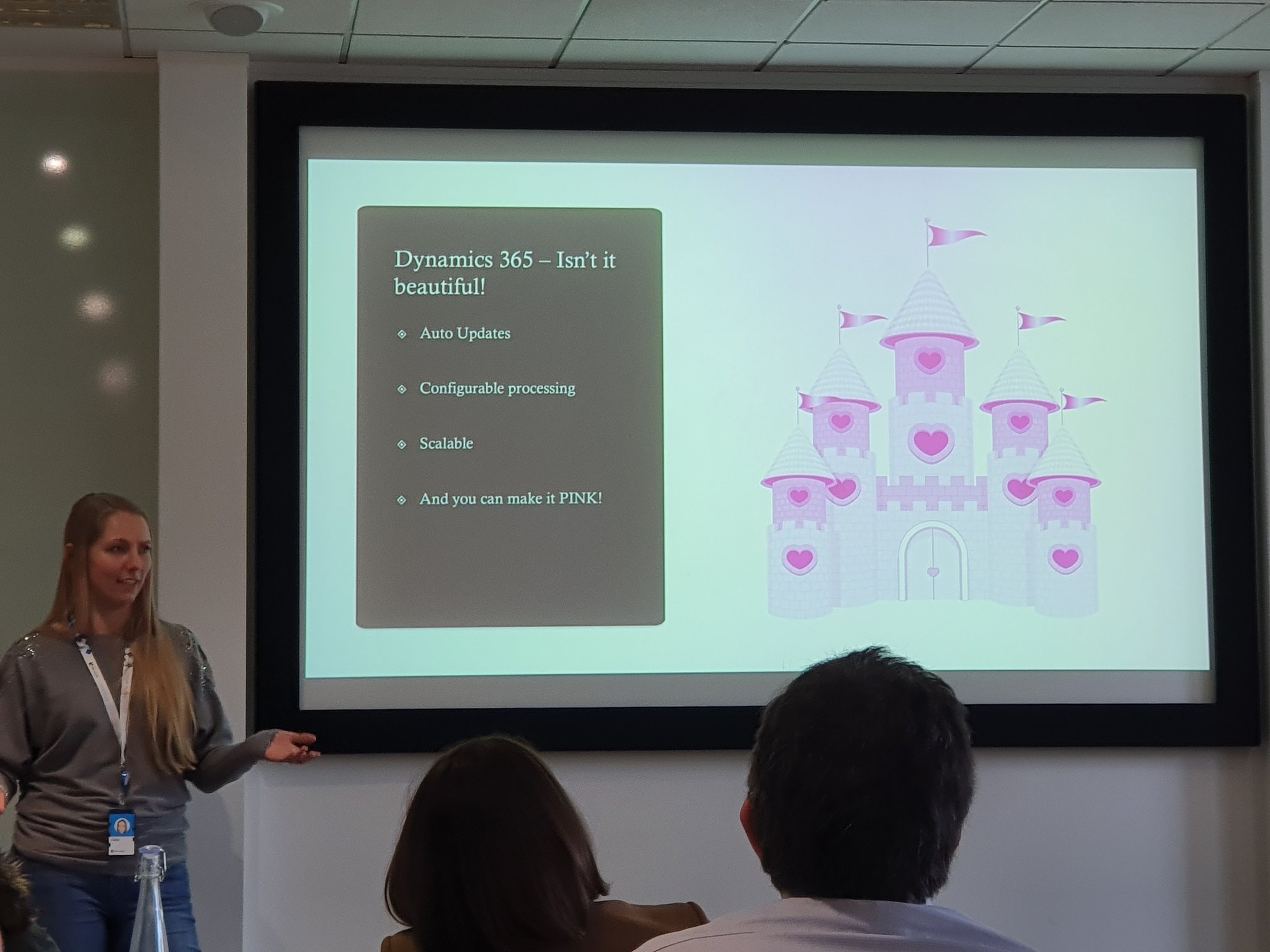
Kaila Bloomfield led the final session, showing how wonderful everything would be if it were all pink! This talked about the capabilities of the different options of Power Platform versus Azure functionality, and that it’s not always a case of just being able to use Power Platform components without running into issues.

Power Platform Admin Centre

Ever wished that you had a single place to manage/create environments, see statistics for all of your systems, view data integrations, etc?

Traditionally, it’s sometimes been quite hard to see all of this – admins have had to go to multiple places to find this information, and then bring it all together manually. A tedious task at times! This was especially true if an organisation had multiple environments – truly a major headache.

Image result for system admin frustration

But now…..there is an answer!

With the new Power Platform Admin Centre (note – it’s currently in Preview), this is all a thing of the past. It’s now extremely easy to see a massive amount of information in just one place. This covers environments, analytics (not only Dynamics environments, but now also the CDS, Flow and PowerApps for a tenant), Data Integrations, Data Gateways, etc.

The URL to use is https://admin.powerplatform.microsoft.com . When logging in, you’ll see the various options in the left hand menu bar.

Some screenshots (some obfuscation for privacy reasons):

Environments

Analytics

CDS Information

So go log in, and see what wonders you can find. Happy discovery…and enjoy the freed up time that you should now be having!

Microsoft Stack Part 10: Dynamics 365

Microsoft: Dynamics 365

Image result for logo microsoft dynamics 365

Dynamics 365 is Microsoft’s business application suite, combining in a single system its Enterprise Resource Planning (ERP) and Customer Relationship Management (CRM) capabilities. It includes four main applications: Customer Engagement, Finance and Operations, Talent and Retail.

Image result for logo microsoft dynamics 365 customer engagement

Microsoft allows organisations to pick and choose the specific applications they want to use to achieve their needs and objectives. This allows organisations to use only the applications that they need, rather than purchasing licenses to applications that may be left unused.

Dynamics 365 for Customer Engagement

Dynamics 365 for Customer Engagement is Microsoft’s CRM system. It contains a collection of separate applications that make up its CRM system, including: Sales, Marketing, Customer Service, Field Service and Project Service Automation.

Dynamics 365 for Sales

This application enables organisations, and the users within these organisations, to track sales across the entire sales lifecycle from beginning to end, build and maintain close customer relationships through effective management of customer accounts and gain valuable insights on the sales process. The application also includes tips, suggestions and insights which help to maintain customer relationships with ease.

Functionality includes:

  • Contacts/Accounts
  • Leads
  • Opportunities
  • Quotes
  • Orders
  • Invoices

Dynamics 365 for Marketing

Dynamics 365 for Marketing is an application which seeks to optimise the way in which organisations generate sales opportunities and turn them into business relationships. The application seeks to bring together sales and marketing strategy to create a unified approach for managing the whole sales lifecycle. Companies can use the Marketing application to create a personalised marketing strategy which uses data on previous activity to target specific individuals and deliver personalised advertisement messages.

Functionality includes:

  • Event Management
  • Portals
  • LinkedIn Integration
  • Lead Management
  • Surveys
  • Email Marketing
  • Behaviour tracking
  • Customer Journeys

Dynamics 365 for Customer Service

This application provides companies with the ability to provide personalised, high quality customer service on a range of platforms. The Customer Service Hub within the application provides a centralised GUI and includes many tools that companies can use to improve and optimise the service they provide to customers. These tools provide a complete view of customer cases and enable companies to provide personalised support for customers. Users can create and view customer cases, record and monitor progress, view previous customer interactions and see an overview of all open cases, which can be broken down into categories, such as product, priority and incident type.

Functionality includes:

  • Contacts/Accounts
  • Queues
  • Cases
  • Contracts
  • Knowledge Base Articles
  • SLA’s

Dynamics 365 for Field Service

The Field Service application focuses on businesses’ operations in the field and provides companies with tools they need to successfully operate and deliver high quality service to customers when on-site. The application optimises the efficiency of resources through improved scheduling, increasing the effectiveness of staff on-site and utilises Internet of Things to identify and diagnose customer issues early on.

Functionality includes:

  • Resources
  • Bookings
  • Work Orders
  • Inventory
  • Agreements & Billing
  • Universal Resource Scheduling

Dynamics 365 for Project Service Automation

Project Service Automation is an application targeted towards companies that provide project-based services and includes tools to increase productivity, efficiency and the quality of the work being delivered. The application includes tools to assist these organisation through the whole project lifecycle and allows users to plan projects, track progress, forecast price and profitability, monitor the scope, review and assess costs and time, optimise resource scheduling, amongst other things

Dynamics 365 for Finance and Operations

Dynamics 365 for Finance and Operations is Microsoft’s integrated ERP system. It includes a variety of features such as supply chain management, intelligent analytics, financial management, operations support and human resources management. One of the central features of Finance and Operations is its financial management capabilities. This platform allows organisations to use features such as general ledger, accounts payable, accounts receivable, banking, budgeting and forecasting, fixed asset management and tax management.

Finance and Operations also includes a number of capabilities which aid organisations to manage and optimise their supply chain operations. Some of these capabilities include sourcing and procurement, inventory and warehouse management, materials requirements planning (MRP), and manufacturing management. These capabilities enable organisations to optimise and automate their supply chain at every point throughout the process.

Dynamics 365 for Talent

Dynamics 365 for talent, Microsoft’s human capital management application, provides organisations with the tools they need to optimise the way in which they manage and engage with their workforce. Talent is made up of three central parts:

  • Attract
  • Onboard
  • Core HR

Attract focuses on the all parts of the recruitment process, from finding suitable candidates to submitting offers to successful applicants. Once successful applicants become new employees, the Onboard part of Talent helps to assimilate new joiners into the organisation. Finally, Core HR is designed to enrich the experience of employees and managers in organisations by creating a self-service portal. Within this portal employees can request time off, set and track performance goals, receive feedback and monitor skills and capabilities.

LinkedIn is the world’s largest talent database and often the primary system that recruiters use to find, communicate with, and source candidates for the jobs that recruiters are looking to fill. LinkedIn Recruiter integration with Dynamics 365 for Talent (Attract) makes it easier for users to hire, and to keep the data in sync between the two systems

Dynamics 365 for Retail

Dynamics 365 for Retail works to bring together both front and back office function to assists businesses in optimising inventory, merchandising, store operations and hardware to create a unified multi-channel sales approach that delivers a high-quality shopping experience.

Retail shares functionality with both Finance and Operations, and Talent.

Dynamics 365 for Business Central

Microsoft Dynamics 365 Business Central is a cloud-based, all-in-one business management solution which enables customers to upgrade from their entry-level accounting software or legacy ERP system to one single, comprehensive solution to manage finances, operations, sales and customer service. Helping organisations streamline their processes, improve customer relations and enable growth through:

  • Business without silos—connecting businesses and boosting efficiency with automated tasks and workflows, all within the familiar Microsoft interface of applications such as Word, Outlook and Excel.
  • Actionable insights—achieving more and gaining a complete view of the business with connected data, business analytics and guidance delivered by Microsoft’s leading intelligent technologies.
  • Solutions built to evolve—get started quickly, growing and adapting in real time with a flexible platform that makes it easy to extend beyond Business Central based on evolving business needs.

Microsoft Dynamics 365 Business Central Essentials includes the following functionality:

  • Financial Management—general ledger, workflows and audit trails, bank management, budgets, deferrals, bank reconciliation, dimensions, fixed assets and currencies.
  • Customer Relational Management—contacts, campaigns, opportunity management and built-in integration with Dynamics 365 for Sales.
  • Supply Chain Management—sales order management, basic receivables, purchase order management, locations, item transfers, and basic warehousing.
  • Human Resources—employees and expense management.
  • Project Management—resources, estimates, jobs and time sheets.
  • Other—multiple languages, reason codes, extended text, Intrastat reporting, scheduled tasks and Outlook integration

Microsoft Dynamics 365 Business Central Premium will include the above functionality, plus:

  • Service Order Management—service orders, service price management, service item management, service contract management, planning and dispatching.
  • Manufacturing—production orders, version management, agile manufacturing, basic supply planning, demand forecasting, capacity planning, machine centres and finite loading

Microsoft Stack Part 9: CDS & CDM

Microsoft’s Common Data Service

Microsoft’s Common Data Service (CDS) is an Azure-based application which stores and manages the data that is used to create applications on PowerApps and explore insights on Power BI.

CDS is the collective name for two different services offered by Microsoft, CDS for Apps and CDS for analytics.

The former is built into PowerApps and it brings together and stores the data from Dynamics 365 applications and databases to enable users to create business applications.

The latter, on the other hand, is similar to a data warehouse or data lake. It pulls, aggregates, cleans, integrates and stores data from multiple sources which can then be used by organisations for analysis to produce visualisations, dashboards and reports.

Using CDS has a number of benefits, including:

  • Effortless data management: the data is stored in the cloud, so users can benefit from the lower costs associated with cloud storage, scalability. data redundancy and high availability.
  • Security: role-based access allows organisations to easily control who has access to the data
  • Dynamics 365 integration: users can easily utilise data on Dynamics 365 to create business applications
  • Data quality: business rules, workflows and process flows are used to ensure the quality of the data that is stored.

Common Data Model (CDM)

When using multiple sources to create business applications or explore business data, each source may have a specific way in which it categories, formats and structures the data. In order to aid the development of business applications and data analysis, CDS uses the Common Data Model to create standardisation and consistency across the data. The CDM is shared data language that allows different business applications and databases to communicate in the same language, so to speak.

The CDM contains a set of standardised schemas and semantic metadata that creates a standardised structure and format for data coming from different sources. It does this through the set of entities that standard across businesses, as well as the relationships between these entities. Entities are a set of individual data records.

Think of entities as tables within a database and records as specific rows within those tables. It is common for entities to share the same data and thus have a relationship.

For example, the entity “Discount” will likely share data with “Quote”, since businesses will quote a discounted price to attract customers. If a business requires an uncommon, specific entity they have the option of creating their own. Some of the standard entities included in the CDM are listed below.

Microsoft Stack Part 8: Communication & Social Networking

Microsoft: Communication and social networking

Teams

Image result for logo microsoft teams

Microsoft Teams is a communications tool that enables the growth of interaction and collaboration by enabling text and video chat between team members. In teams, users can participate in group chat room threads, send and receive instant private messages and video call with two or more users. However, Team is more than just a messaging tool, uses can also view, edit and share documents on OneDrive without leaving the application. Users with Enterprise, Business Essentials or Business premium can access Teams.

Team is available through an internet browser, desktop application and mobile app.

It is possible to use to use teams externally as well as internally. Meetings can be set up and held with people who are external to a company, simply by sending through Team Meeting link. Attendees can then connect to the meeting through whichever device they prefer, or can call in from a phone (in which case there won’t be any option for video).

Native integration with Microsoft Office services include Word and Excel, but also SharePoint, OneNote, PowerPoint, Planner, Power BI, Delve and cloud storage. Among the benefits of the latter is that all team members can view the latest version of data, as content is synced and stored instantly. This can allow members of a team to instantly view and collaborate on documents together – this can also be done whilst on a Team meeting call.

Key benefits of Teams:

  • One centralised hub
  • Office 365 integration
  • Customise Teams through APIs and bot frameworks
  • Enterprise security & compliance
  • Azure Active Directory integration
  • No extra cost to Office 365 users

It was announced that from October 2019, Teams would absorb the capabilities of StaffHub, which will be discontinued. StaffHub is a scheduling and work planning application which helps organisations with the onboarding of new staff, deliver training and assign tasks.

Yammer

Image result for logo microsoft yammer

Yammer is an enterprise social network which allows social networking and communication within organisations. It present a less-formal alternative to email communication, and it creates a space for engagement where employees can respond to the announcements made by management.

Whereas Teams is used for instant messaging in relatively small teams, Yammer can be used for engaging with organisations or departments as a whole. Yammer can be used to send out task reminders, announce recent successes or changes to the business, praise employees and introduce new joiners, for example. Another key feature is that external individuals can be added to the organisation’s Yammer, aiding greater collaboration and engagement with external stakeholders.

Yammer can be described as an organic knowledge repository of information and idea sharing. It’s not uncommon for people to send emails (this is how we traditionally conducted business) but it is also not uncommon for things to get lost in email.

Skype for Business

Image result for logo microsoft skype for business

Skype for Business is a communications enterprise software that can be used on the cloud, known as Skype for Business Online, or on premise, known as Skype for Business Server. It enables users to communicate via instant messaging, as well as audio and video calling.

In September 2017, Microsoft announced that Skype for Business would be replaced by Teams.

Microsoft Stack Part 7: Power Platform

Microsoft: Power Platform

The Microsoft Power Platform is a system of applications which work together to enable users, from managers to employees, to have a positive impact on the business and its customers. There are three parts to the system: Power BI, Flow and PowerApps. Although each application can be used individually, it is the combination of all three which produces the greatest benefit for organisations.

Power BI

Image result for logo powerbi

Power BI is a business intelligence software which allows users to analyse and visualise data to produce useful and actionable business insights without the need for technical skills. Data can be imported into Power BI from a number of different sources, such as excel spreadsheets and on premise or cloud-based datacentres. Power BI can be used on the desktop application called Power BI Desktop, the online software-as-a-service application called the Power BI Service, or through the mobile application.

There several central components of Power BI: Power Query, Power Pivot, Power View, Power Map, Power BI Service and Power BI Q&A.

Power Query

Power Query is used to extract, clean and transform data from a range of different sources, such as databases including SQL Server and MySQL, files such as Excel, JSON and CSV, and other applications such as Azure and Outlook.

Power Pivot

Power Pivot is a data modelling tool which allows users to create data models where data is structured in a way to show the inter-relationships and hierarchies between different data elements. For example, if two different datasets contain common data in their columns, users can use Power Pivot to easily create relationships between the two datasets by using the drag and drop feature.

Power View

Power View is the main data visualisation tool within Power BI and it allows users to create interactive data visualisation in a number of different formats, such as graphs, charts and treemaps. Users can use slicers to slice and dice the data to explore insights in greater detail.

Power Map

Power Map is an interactive data visualisation tool that enables users to discover and explore insights in 3D which may not have been possible with 2D charts and tables. Due to its integration with Bing, users can explore the data broken down by geographical location.

Power BI Service

Power BI Service is a component which allows users to keep up-to-date with information about their organisation. A central feature of Power BI Service is that users can share dashboards which present insights through interactive data visualisations. Dashboards are made up of tiles, with each tile showing a different data visualisation. Tiles pull data from on premise and cloud-based datasets as their source and will update as the data changes.

Power Q&A

Power Q&A is a natural language tool for asking questions about data in English, rather than in a programming language. Users can ask questions about the data model they have built and imported into Power BI and receive answers quickly and easily. This feature allows users to explore insights that they may not have discovered otherwise.

For example, if the data contains a number of columns with the titles “region”, “quarter” and “sales”, a user can type the following question into Q&A: “sales by region in the last quarter as a bar chart”, and Q&A will produce a bar chart showing that information. If users do not specify which type of visualisation they want the data to be presented in, Q&A will choose the best type based on the data. Q&A also includes keywords contained in the dataset to help uses ask meaningful questions about the data. Another way in which Q&A helps uses is that it comes with an auto-complete feature, which predicts the question the user is going to ask.

Flow

Image result for logo microsoft flow

Microsoft Flow is a cloud-based software that allows users automate tasks between applications without the need for any technical skills. To do this, users create workflows, known as flows, by specifying the action that should occur when an event happens. Flow can be used to automate a vast number to different tasks, using applications within the Microsoft Suite, such as Dynamics 365, Office 365, and applications outside of the Suite, such as Dropbox, SQL Server, Twitter, Salesforce and GitHub.

Benefits include:

  • Streamline day to day tasks
  • Easily share and access business data
  • Collaborate on a common platform
  • Improve workforce productivity

One way in which Flow can be used is to automate the process of sending an email after an event has occurred. For example, when the status of a lead is updated on Microsoft Dynamics, a flow can be created to automate an email to be sent around specifying the details of the update to the appropriate staff. Although users are free to create their own flows, the application contains an extensive range of flow templates, allowing users to quickly choose the flows they need to automate processes.

It is also possible to build connectors to systems, such as bespoke-developed applications.

PowerApps

Image result for logo microsoft powerapps

PowerApps is a platform-as-a-service application development software in which users can create and share mobile apps for business use that run on a variety of operating systems, such as iOS, Android, Windows and most internet browsers. Rather than having to develop an app for each OS individually, the apps users create run on the PowerApps app. This cuts down the time and cost involved in development drastically.

The aim of PowerApps is to enable users to create business solutions without the need of technical expertise. It does this by presenting an intuitive, user-friendly interface in which users to utilise drag and drop functionality to create apps. Although PowerApps does require the use of formulas, these formulas are based on those used in Excel to optimise ease of use. The key benefit of this is that it makes solving business issues accessible to those who would not necessarily have been involved in a traditionally technical task, bringing new ideas that add value to the business.

Much like Flow, PowerApps can be used with a number of different applications, such as Dynamics 365, SQl Server, SAP, Oracle and Dropbox.

There are two methods for creating PowerApps:

  • Canvas Driven
  • Model Driven

Canvas Apps is a visual canvas to help you design and build apps – the aim is to provide a comfortable environment to create what is needed. Rather than using complicated coding or programming tools, users can drag and drop various elements into the canvas from whatever is required. Throughout, it’s possible to format the right conditions and settings that are needed to make the application work. Existing data sources can be integrated natively without any issues.

Model apps can run as either a standalone or as the backend to a canvas app. One of the core benefits of Model-driven apps is their ability to generate data models. When inputted, the data is defined as a structure which allows the app to conform to your information. Similarly, developing an application utilises consistent business processed. Once this is all finished, the app designer would then be used to develop the final product. No matter how complex or easy, what matters are the steps that provide the basis for its completion. The simple application architecture allows the app to be customised, without creating new code.

Microsoft Stack Part 6: File Storage & Collaboration

Microsoft: File storage and collaboration

Microsoft has a several different file storage and collaboration solutions which can be deployed within organisations to allow sharing, interaction and collaboration between employees.

SharePoint Online

Image result for sharepoint online logo

SharePoint Online is Microsoft’s cloud-based tool which is designed to foster an environment of sharing and collaboration within organisations. One of the primary ways organisations use SharePoint is to manage and share resources within organisations by storing them on the cloud. Rather than storing documents in a single location, storing resources on the cloud allows users to access documents from any device, and interact and collaborate with others across the organisation.

Organisations can also use SharePoint as an enterprise content management system, in that it can be useful as a means to efficiently store and organising data and information on a system that can be accessed by the internet. However, there are also many other ways in which organisations can deploy and use SharePoint, such as the creation and management of websites, customer relationship management, networking facilitation, business intelligence and workflow management.

Organisations wishing to maintain control over their data and have a greater ability to customise SharePoint to meet their needs can deploy SharePoint Server, which is installed on premise. This may be preferable for organisations that hold sensitive and classified data.

Some uses of Sharepoint are:

  • Intranet Portals,
  • Document & File Management,
  • Social Networks,
  • Websites,
  • Extranets,
  • Advanced Search Functionality
  • Increased Business Intelligence solutions

Collaboration abilities allow more than one team member to access, edit, and annotate a document simultaneously. Team members can collaborate to formulate the document by breaking down tasks or sections, and SharePoint will cohesively stitch together a complete document on the fly as they work.

It’s also possible to use Sharepoint as a document storage repository when using other Microsoft applications, such as Dynamics365. There is seamless integration between these products, and implementations of this can have major benefits in terms of storage pricing (Sharepoint storage is somewhat of a fraction of the cost of Dynamics storage – the benefits of this are seen when implementing solutions that will need to scale up over time). It can be used for attachments, emails, etc

OneDrive for Business

Image result for logo onedrive for business

OneDrive is Microsoft’s cloud storage service that allows users to store files and access them from anywhere on any device. Due to its integration with Office 365, OneDrive enables users create and edit documents on the cloud, and share these documents to collaborate with others. Local copies of documents can be downloaded from the cloud to view and edit offline (with then synchronising back online when re-connected). The service can be used for both personal and business/school use, but the latter service is managed internally in the organisation and is referred to as OneDrive for Business.

Following on from the information for Sharepoint above, OneDrive for Business with Dynamics 365 is a great way to expand on SharePoint integration by allowing users to associate documents to SharePoint-enabled entities from their own OneDrive for Business folders. This does need Sharepoint to already be in place and integrated with Dynamics365 in order to work

Delve

Image result for logo microsoft delve

Microsoft Delve is a cloud-based solution powered by Office Graph, which is a repository of user content and activity, and the inter-relationships between them. Essentially, Delve provides users with up to date information on what they are currently working on and who they are working with, and helps increase interaction and collaboration between employees within organisations.

The purpose of Delve is generally to be able to present in front of us what we need before we even ask for it. An example of this could be an upcoming meeting – Delve should be able to show you the related documents for the meeting (subject to security controls – if you don’t have security access to view the files, they won’t be displayed)

On Delve, all users can create and update their Office 365 profile with their professional interests, current projects, skills and certifications. Users also receive a personalised home page, which enables them to discover important information from across the Office 365 Suite, such as emails, events, contacts and documents. The home page provides users with links to their recently accessed documents, other user’s profiles and a content feed. This content feed uses machine learning and artificial intelligence which tracks user activity and interaction to present content that may be of interest to the user.